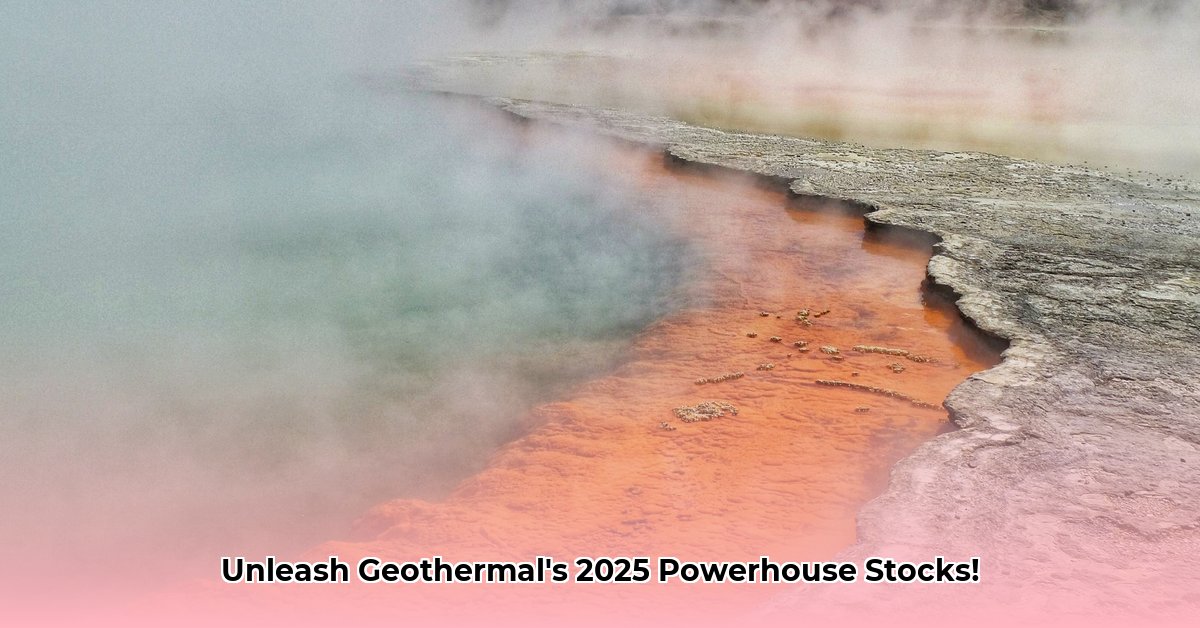
Geothermal Stocks: A 2025 Investment Deep Dive
The renewable energy revolution is reshaping the global energy landscape, and geothermal energy, a consistent, reliable power source, is emerging as a key player. Investing in geothermal stocks offers intriguing possibilities, but understanding the market dynamics and inherent risks is crucial for informed decision-making. This in-depth analysis explores the geothermal investment landscape in 2025, providing actionable insights for savvy investors.
Is geothermal energy investment truly as promising as experts suggest? Considering its reliability and environmental benefits, the potential for significant returns is undeniable.
The Geothermal Energy Market: A Booming Sector
Unlike solar or wind power, geothermal energy boasts a remarkably high capacity factor—around 90%—due to its consistent energy output regardless of weather conditions. This reliability is a major advantage, attracting significant interest from investors and governments alike. Market growth projections vary, but several experts predict substantial expansion in the coming years, driven by increasing demand for clean energy and technological advancements. These innovations, often adapted from the oil and gas industry, are making geothermal energy extraction more cost-effective and efficient. Supportive government policies and incentives further bolster the sector's growth trajectory.
However, the geothermal energy market faces challenges. Suitable geological conditions are essential for geothermal plant construction, limiting project locations and hindering large-scale expansion.
Investing in Geothermal: Your Options
Accessing the geothermal investment market offers several avenues:
Pure-Play Geothermal Companies: These companies are solely focused on geothermal energy, offering direct exposure to the sector's growth. Although riskier, this approach provides higher potential returns.
Diversified Energy Giants: Major energy companies often include geothermal energy in their portfolios. Investing in these firms diversifies risk, providing stability while maintaining exposure to the geothermal sector. The returns may be more modest, however.
Clean Energy ETFs: Exchange-traded funds (ETFs) concentrating on clean energy offer diversified exposure to the geothermal market without the need to select individual stocks. This is particularly attractive for investors new to renewable energy investments. This approach reduces individual stock risk but potentially limits significant gains.
Before committing to any investment, thorough due diligence—analyzing financial health, strategies, and associated risk profiles—is essential for all investment options.
Isn't careful selection of investments crucial for maximizing returns while mitigating risks? This is especially true in the geothermal sector.
The Risks: Navigating the Geothermal Landscape
Geothermal energy investments, like other ventures, carry inherent risks:
Drilling Disasters: The unpredictable nature of drilling, coupled with high costs, poses a significant risk. Equipment malfunctions or unforeseen geological conditions can cause project delays and cost overruns.
Ground Instability: Unexpected ground shifts can damage plants, resulting in costly repairs or complete shutdown.
Regulatory Roadblocks: Delays in obtaining permits and navigating complex environmental regulations can significantly impact project timelines and budgets.
Political Instability: Projects located in politically volatile regions face disruption or potential cancellation, jeopardising investments.
Technological Setbacks: While technological advancements are crucial, unforeseen technical difficulties can lead to project delays and increased expenses. Technological advancements are critical but aren’t without their own set of unforeseen challenges.
Here's a summary of the potential risks:
| Risk Category | Likelihood (Estimate) | Impact (Severity) | Mitigation Strategies |
|---|---|---|---|
| Drilling Problems | Moderate | High | Advanced site surveys, cutting-edge technologies, insurance |
| Ground Instability | Moderate | High | Advanced geological surveys, robust plant design |
| Permitting Delays | Low | Moderate | Early engagement with regulatory bodies |
| Political Instability | Low | Moderate | Geographic diversification of investments |
| Technological Setbacks | Moderate | Moderate | Investing in companies with strong R&D capabilities |
Your Geothermal Investment Action Plan: A Step-by-Step Guide
Conduct Thorough Research: Meticulously investigate potential investments, analyzing financial statements, business strategies, and associated risks.
Diversify Your Portfolio: To reduce risk, distribute investments across multiple companies or ETFs.
Stay Informed: Monitor industry news, technological advancements, and policy changes that may influence geothermal investments.
Adopt a Long-Term Perspective: Geothermal energy investment is a long-term strategy. Avoid reacting to short-term market fluctuations.
Conclusion: Harnessing Geothermal's Potential
Geothermal energy presents significant investment opportunities within the renewable energy sector. However, success necessitates a thorough understanding of associated risks and a strategic approach to mitigation. By conducting thorough due diligence, diversifying investments, and maintaining a long-term perspective, investors can potentially capitalize on the growth prospects of the geothermal energy sector. Remember this information is for educational purposes, not financial advice. Consult a financial professional before making any investment decisions.